What Is Brain Scan Marketing?
In recent years there has been a lot of fascinating research
into the way we think and the way the brain is affected by various
things. 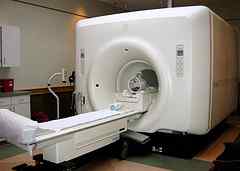 As part
of my website on brainpower I report on this, and I also just
enjoy learning about the latest findings. But with raw research
there is often no immediately obvious application, and I also
love to see new ideas put to use in some way. That brings us
to the subject of this page: brain scan marketing. As part
of my website on brainpower I report on this, and I also just
enjoy learning about the latest findings. But with raw research
there is often no immediately obvious application, and I also
love to see new ideas put to use in some way. That brings us
to the subject of this page: brain scan marketing.
Flickr photo by Liz West
Whether we like it or not, much of the most creative thought
is about how to sell us things. In fact, the first applications
of any given brain research is often in the field of marketing.
Once brain scan machines were invented, for example, it was perhaps
inevitable that marketers would wonder if they could be used
to understand the brain in a way that made it possible to sell
things more easily, or to predict which products would sell.
The latter purpose is the one considered to have the most potential
at the moment.
Doing brain scans has become a way to pick a winner among
potential products or songs. It started with the classic "Pepsi
challenge." Scientists let subjects taste Pepsi and Coca
Cola to see which they preferred, but they tried a few new twists
with the testing, and recorded what was going on in the brain
during these, using an MRI scanner. For example, they found that
when Pepsi was mislabeled as Coke, people liked it better. This
suggests that good brand marketing works.
That was with a known and popular product though, and some
scientists wanted to do more with the MRI brain scans. For example,
they wondered if the there might be a pattern of activity in
the brain when people tried new products--one that would predict
future success.
A recent article in Scientific American reported on one
study in which the brains of teenagers were monitored while they
listened to new songs. Then they waited a few years...
During that time, the songs did what songs will do. A tiny
percentage became extremely popular, a handful more became somewhat
popular, and the overwhelming majority went nowhere. After tallying
the sales information for each song, the scientists essentially
took a shot in the dark. They re-examined brain areas associated
with song likability years ago, and asked if activity in those
areas predicted a song’s eventual success.
For one area - the nucleus accumbens - the answer was yes.
Though it certainly didn’t distinguish between hits and
duds with dead-on accuracy, more activity in the accumbens was
loosely predictive of higher sales.
This study wasn’t designed to test any specific idea
about how the nucleus accumbens might do this. However, a good
deal of other work has implicated this structure in reward processing
and the subjective experience of pleasure, including that derived
from music...
Time will tell us what record companies can do with that information,
but it seems likely that whether or not there is much to the
science, there will soon be marketing research done by way of
brain scans for large companies. It might open up a new line
of work for human guinea pigs who participate in scientific research
for pay.
|
